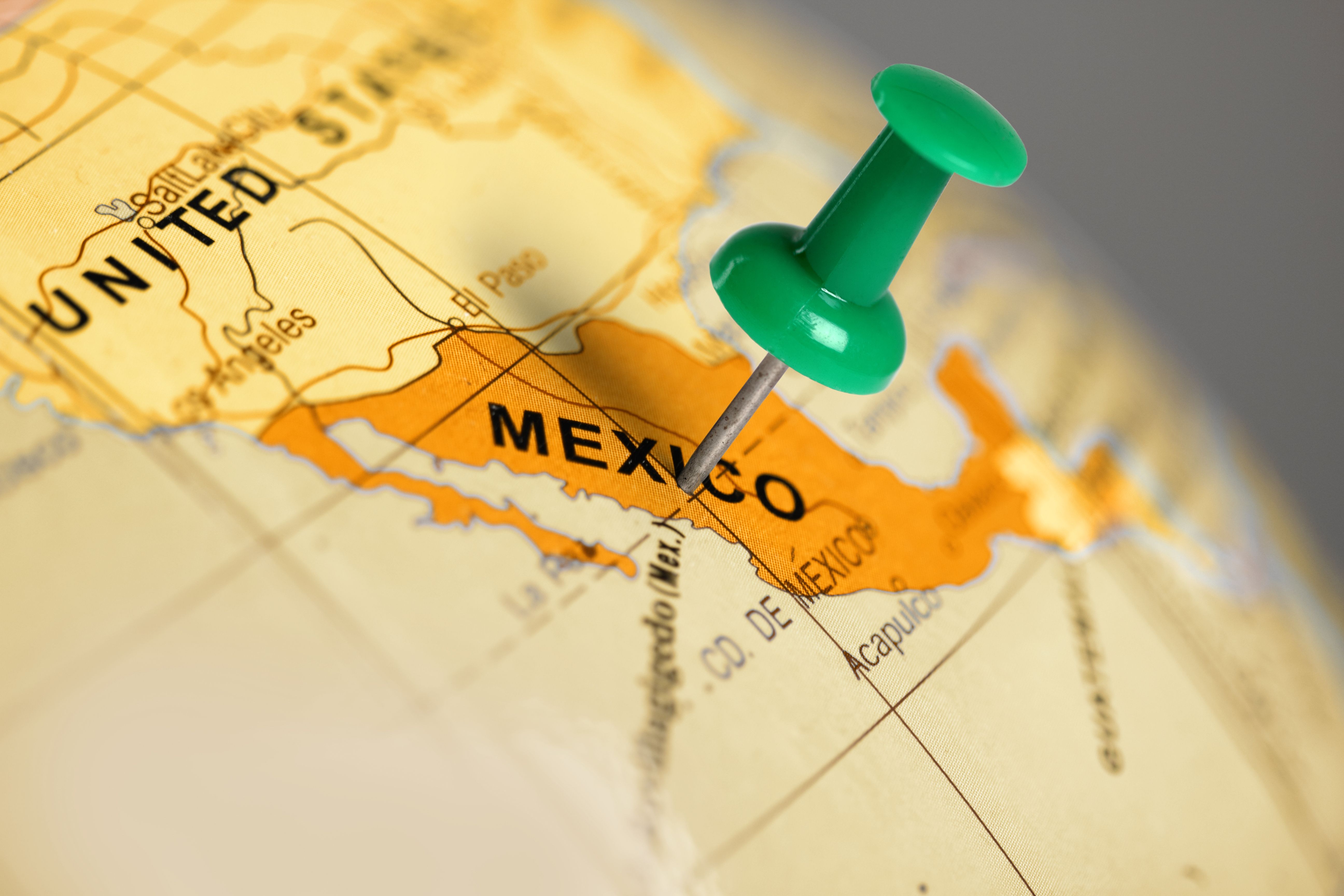
The U.S.-Mexico Money Corridor: Understanding the Heartbeat of Cross-Border Support
The U.S.-Mexico remittance corridor moves tens of billions of dollars a year. Here's how it works, what's changing in 2026, and how Xoom delivers to OXXO, BBVA, and Mexican bank accounts.
The U.S.-Mexico remittance corridor is one of the largest and most closely watched money transfer routes in the world. Mexico is the second-largest remittance recipient on earth, behind only India, with the World Bank estimating close to $68 billion arriving.¹ For millions of families, this isn't abstract economics. It's rent, groceries, school fees, and medical bills, arriving a wire transfer at a time.
A Corridor That Dipped, Then Started to Recover
It's worth being upfront about something happening right now: after more than a decade of steady growth, remittances to Mexico actually fell in 2025, dropping 4.6% to $61.8 billion, the first annual decline in 16 years.² 2026 has told a more mixed story so far. January opened with another year-over-year dip, but remittances turned positive again in February and kept climbing from there, up 4.9% in March and roughly 3.1% for the first half of the year overall.³ Economists point to the same forces pulling in different directions: stricter US immigration enforcement and a softer US labor market weighing on the totals, partly offset by a weaker Mexican peso, which makes each dollar sent go further and can encourage larger transfers.
That context matters, because it underscores just how directly this corridor tracks real lives on both sides of the border. When enforcement policy shifts, the money that reaches a household in Michoacán shifts with it, often within weeks.
Where the Money Goes, and Why It Matters
Remittances remain a steady, essential income source for Mexico's poorest households, which use the money mainly for necessities: food, clothing, healthcare, and other everyday household costs.⁴ About two-thirds of remittance recipients in Mexico live in rural or semi-urban areas, the households most exposed when the flow of money slows down.⁵ Guanajuato, Michoacán, and Jalisco consistently receive the largest share of any Mexican states.⁶
That's also why delivery method matters so much here. A wire transfer that only sends to a bank account is a lot less useful to a family in a rural pueblo without a nearby bank branch than a service that can put cash directly into their hands.
How Xoom Delivers Across Mexico
Xoom's Mexico network is built around exactly that reality. Recipients can pick up cash at more than 41,000 locations nationwide, including OXXO, Elektra, and BanCoppel, storefronts that are often far more accessible in rural areas than a bank branch.⁸ For senders who'd rather send to a bank account directly, Xoom reaches most major Mexican banks, including BBVA (Bancomer), Bancoppel, Banco Azteca, and Banorte. And for recipients who prefer to keep things digital, Xoom also delivers straight to Mercado Pago accounts and Spin by OXXO mobile wallets.⁷
Bottom Line
The U.S.-Mexico corridor went through a real downturn in 2025, and it's worth watching honestly rather than glossing over that. But the 2026 recovery so far is real too, and either way the underlying need hasn't changed: families across Mexico, especially in rural communities, still depend on money arriving quickly and in a form they can actually use. Xoom has built its Mexico network, cash pickup at OXXO and Elektra, sending to bank accounts for some of Mexico's largest banks, and mobile wallet delivery to Mercado Pago accounts and Spin by OXXO, around that need. It's reached more than 160 countries since its founding in 2001⁹, but for this corridor specifically, it's built to match how Mexican families actually receive and use their money.
Sources
1. In 2024, remittance flows to low- and middle-income countries are expected to reach $685 billion, 2024. https://blogs.worldbank.org/en/peoplemove/in-2024--remittance-flows-to-low--and-middle-income-countries-ar
2. Remittances dropped 4.6% in 2025, the biggest annual decline in 16 years, February 4, 2026, citing Banco de México. https://mexiconewsdaily.com/news/remittance-biggest-decline-in-16-years/
3. Remittances to Mexico Are Up 1.4% in 2026 After Freefalling in 2025, May 6, 2026, citing BBVA Research and Banco de México. https://mexiconewsdaily.com/news/remittances-march-2026/
4. Understanding the Impact of Remittances on Mexico's Economy and Safeguarding Their Future Impact, January 2025. https://www.csis.org/analysis/understanding-impact-remittances-mexicos-economy-and-safeguarding-their-future-impact
5. Remittances to Mexico fall by $3 billion; things won't get better in 2026, experts warn, February 5, 2026, citing BBVA Research. https://www.borderreport.com/news/trade/remittances-to-mexico-fall-by-3-billion-things-wont-get-better-in-2026-experts-warn/
6. Remittances dropped 4.6% in 2025, the biggest annual decline in 16 years, February 4, 2026. https://mexiconewsdaily.com/news/remittance-biggest-decline-in-16-years/
7. Send Money to Mexico, accessed July 2026. https://www.xoom.com/mexico/send-money
8. Xoom: Send Money & Transfer, Google Play Store listing, accessed July 2026. https://play.google.com/store/apps/details?id=com.xoom.android.app&hl=en
9. Xoom (money transfer service), accessed July 2026. https://en.wikipedia.org/wiki/Xoom_(money_transfer_service)